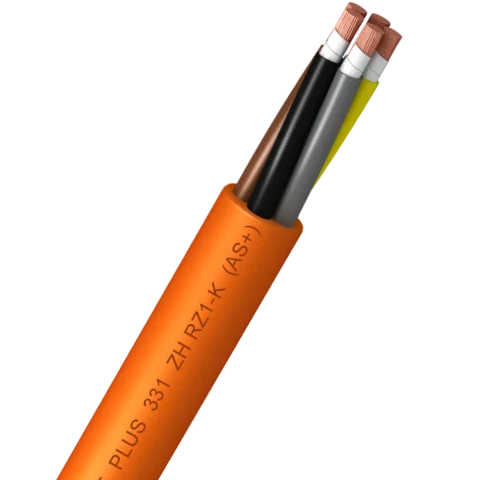
TOXFREE® LSZH RZ1MZ1-K
LSZH armoured cable with galvanized steel wire armour (ATEX).




TOXFREE® LSZH N2XH flex is a LSZH cable for fixed installations, highly recommended for use in public places. This cable is also available in its variants N2XH-J and N2XH-O.
 Enhanced Fire Safety | CPR Cca B2ca LSZH
 Enhanced flexibility and ease of Installation
 Versatile applications for fixed LSZH power installations
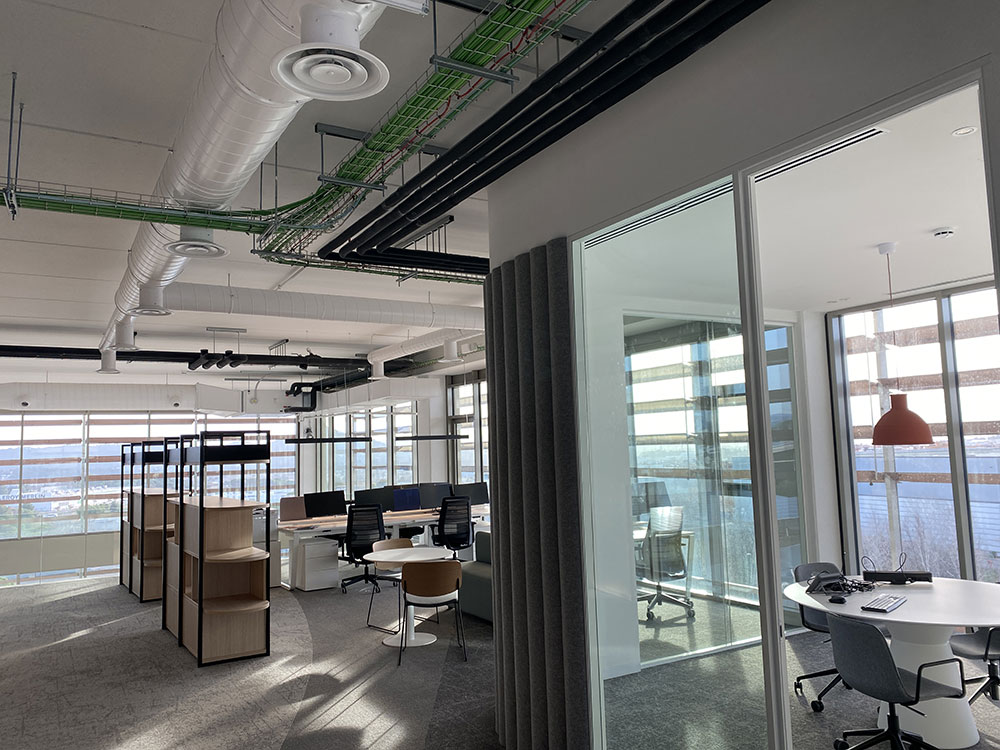
UK Building Regulations, European CPR and worldwide electrical national codes increasingly mandate LSZH cables in public spaces and high-occupancy buildings—making N2XH flex not just better performance, but often a regulatory requirement. Provide minimal smoke emission (enabling clearer evacuation routes and safer escape conditions during fires), prevent the release of corrosive or chlorine-based toxic gases, and reduces potential for smoke inhalation injuries. This cable is also available in its variants N2XH-J and N2XH-O.

This combination eliminates the need for separate cable specifications, simplifying procurement and ensuring compliance across UK, European and worldwide installations.
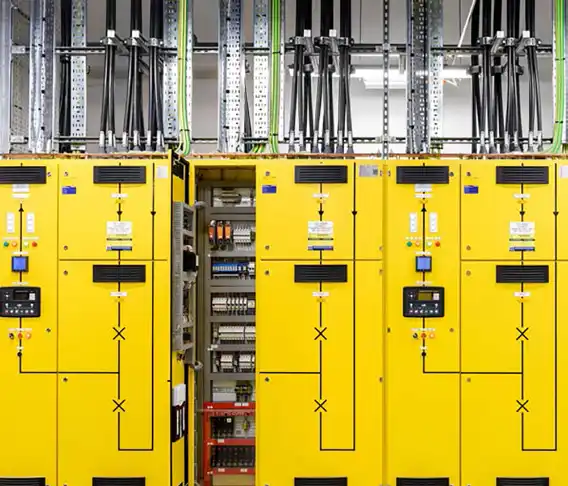
The N2XH-J and N2XH-O variants offer additional mechanical protection for demanding routing scenarios, making this cable family the strategic choice for mission-critical facilities.
UK Building Regulations, European CPR and worldwide electrical national codes increasingly mandate LSZH cables in public spaces and high-occupancy buildings—making N2XH flex not just better performance, but often a regulatory requirement. Provide minimal smoke emission (enabling clearer evacuation routes and safer escape conditions during fires), prevent the release of corrosive or chlorine-based toxic gases, and reduces potential for smoke inhalation injuries. This cable is also available in its variants N2XH-J and N2XH-O.
This combination eliminates the need for separate cable specifications, simplifying procurement and ensuring compliance across UK, European and worldwide installations.
The N2XH-J and N2XH-O variants offer additional mechanical protection for demanding routing scenarios, making this cable family the strategic choice for mission-critical facilities.
TOXFREE® N2XH flex is a LSZH cable for fixed installations. In the event of fire, it does not emit toxic or corrosives gases,preventing any possible harm to people or electronic equipment. For these reasons it is highly recommended for use in public places such as: hospitals, schools, museums, airports, bus terminals, shopping malls, offices, laboratories, etc.
XLPE.
The standard identification of insulation conductors according to HD 308, is the following:
1 x Natural.
2 x Blue + Brown.
3 G Blue + Brown + Green/Yellow.
3 x Brown+ Black+ Grey.
3 x + 1 x Brown + Black + Grey + Blue (reduced cross-section).
4 G Brown + Black + Grey + Green/Yellow.
4 x Brown + Black + Grey + Blue.
5 G Brown + Black + Grey + Blue + Green/yellow.
Polyolefin LSZH.
Black colour.
Disclaimer
The information displayed on this website is provided for reference purposes only and is not legally binding. Specifications, values, and technical data may be subject to change without notice. To obtain verified and up-to-date technical data for a specific cable, please download Top Cable’s official Technical Specification in PDF format. The PDF document constitutes the sole authoritative source of product data.




As cable manufacturers, we ensure cost-effective premium quality and lasting performance.

Our in-house labs guarantee rigorous cable quality, reliability, and standards compliance.

Global cable delivery solutions—expert logistics for seamless supply.

Full cable stock, ready for fast delivery- shortest lead times.
Largest European stockholding.

EPD-certified cables: Sustainable manufacturing for your Scope 3 success.

Expert, friendly and professional sales team offering a fast & efficient customer service. Global customers are welcome!

N2XH is a halogen-free, flame-retardant low-voltage power cable rated at 0.6/1 kV, used for fixed electrical installations in buildings and infrastructure across Europe.
Construction:
The meaning of the cable nomenclature is as follows:
The suffix “-J” indicates the cable includes a protective earth conductor (PE/green-yellow), while “-O” means the cable has no protective earth conductor. N2XH follow the same convention: “-J” includes an earth conductor, “-O” does not. Both “-J” and “-O” versions are available in the flex variant, so the choice depends on your earthing topology, not on the flexibility requirement.
It is governed by DIN VDE 0276-604 and IEC 60502-1, and is the dominant LSZH power cable designation across German-speaking markets and pan-European export projects.
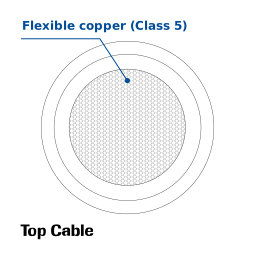
The core distinction is conductor construction. N2XH flex uses stranded flexible conductors (Class 5 per IEC 60228), engineered for repeated bending and movement without conductor fatigue. Standard cable uses solid or stranded rigid conductors (Class 1 or 2), designed for fixed installations where the cable remains static once laid.
N2XH flex is easier to install. The Class 5 stranded construction allows to be routed around bends, pulled through conduits, and dressed into cable management systems with significantly less mechanical effort than rigid version. This translates to reduced installation time and lower risk of insulation damage during pulling.
If your application involves mobile equipment, retractable connections, or frequent maintenance access, N2XH flex is the appropriate choice.
NYY uses PVC insulation and PVC outer sheath— it produces toxic fumes and dense smoke in the event of a fire.
N2XH flex uses XLPE insulation and polyolefin LSZH outer sheath, offering superior fire safety. Where current regulations or building specifications mandate LSZH (Low Smoke Zero Halogen) materials (increasingly common in European public infrastructure), is the compliant replacement.
All variants of N2XH use XLPE insulation, which provides a maximum conductor operating temperature of 90°C and a short-circuit temperature of 250°C – superior to PVC. NYY, R2V – and YmVK, using PVC insulation, are limited to 70°C conductor operating temperature and 160°C under short-circuit conditions.
N2XH flex is the clear recommendation for Data Centre environments. Data Centres demand LSZH cabling to protect server equipment from corrosive halogen gases in fire events, comply with increasingly stringent fire safety standards, and accommodate the dense, flexible cabling layouts typical of raised floors, cable ladders, and PDU connections. NYY and YmVK, both PVC-based, do not meet these requirements. N2XH flex combines the necessary fire performance with the installation flexibility essential in high-density data infrastructure.
Both N2XH flex and R2V (the French-standard equivalent) are rated at 0.6/1 kV, making them interchangeable in terms of voltage applications for low-voltage power distribution. The key differences lie in construction standards and fire behaviour: R2V uses PVC materials (French NF C 32-102), while N2XH flex uses XLPE/ polyolefin LSZH materials conforming to DIN VDE 0276-604 and harmonised IEC standards. In French projects specifying LSZH performance — particularly in infrastructure or tertiary construction — N2XH flex is increasingly specified alongside or instead of R2V.
Both cables are halogen-free, flame-retardant cables designed for fire-sensitive environments, but they originate from different national standardisation traditions. FR-N1X1G1 flex is a French standard cable governed by UTE C 32-070 and NF standards, using XLPE insulation with and polyolefin LSZH sheath and rated at 0.6/1 kV. N2XH flex follows German DIN VDE 0276-604 and harmonised IEC standards. In practical terms, both cables deliver equivalent fire safety outcomes — low smoke, zero halogen, flame propagation resistance — but project specifications in France will often call for FR-N1X1G1 flex by name, while pan-European or German-origin projects will reference N2XH. Cross-referencing both designations in your technical documentation helps capture both audiences.
The substantive differences are regulatory and commercial: FR-N1X1G1 flex is specified under French NF standards and commonly referenced in French public procurement and infrastructure projects, while N2XH flex is the corresponding German/IEC-harmonised designation.
YmVK (the Dutch standard flexible installation cable) and N2XH flex both target flexible, installation-grade applications, but they differ significantly in fire performance and conductor insulation. YmVK uses PVC insulation, while N2XH flex is low -smoke halogen-free. In the Netherlands, where the NEN 3569 and NEN 1010 standards are evolving toward greater fire safety requirements — especially in utility buildings, hospitals, and public transport hubs — this cable satisfies specifications that YmVK cannot meet. For general domestic or commercial wiring without specific LSZH requirements, YmVK remains common.
Flexible conductors require ferrule end-sleeves (also known as bootlace ferrules or wire end ferrules) to maintain conductor integrity at terminal connections, prevent individual strand displacement, and ensure reliable contact pressure. Rigid version conductors can often be connected directly to terminals without ferrules. This is a practical consideration for panel builders and electricians: N2XH flex installations require a ferrule crimping tool and appropriate ferrule sizes per conductor cross-section, adding a minor step to the connection process but delivering more reliable long-term termination.
FG16M16 is an Italian standard cable (CEI 20-38/1, CEI 20-35) using EPR (ethylene propylene rubber) insulation and a thermoplastic LSZH compound sheath, rated at 0.6/1 kV. Compared to N2XH flex, the most significant technical distinction is the insulation material: EPR provides superior flexibility at low temperatures and higher resistance to ozone and UV degradation than XLPE, making FG16M16 particularly suited to outdoor industrial environments, petrochemical plants, and applications where the cable may be exposed to weathering. N2XH flex, with XLPE insulation, offers excellent thermal performance at elevated temperatures (90°C continuous) and is the dominant specification in building and infrastructure projects across Central and Northern Europe. Italian projects and export tenders targeting Italian engineering firms will often specify FG16M16 by name.
RXQ and TXXI 1 kV Cu are Belgian and Dutch harmonised designations for power cables using cross-linked polyethylene insulation with a PVC outer sheath. The fundamental limitation versus N2XH flex is that PVC sheathing produces dense black smoke under fire conditions — a critical disadvantage in occupied buildings, tunnels, and enclosed infrastructure. N2XH flex, with its LSZH sheath, eliminates this hazard. In the Belgian and Dutch markets, where building regulations are progressively tightening around fire cable classifications (EN 50575 / CPR), N2XH flex is increasingly displacing PVC-sheathed cables like RXQ/TXXI in new construction and renovation projects where Cca or Dca Euroclass ratings are required.
Both are LSZH cables, so what actually separates them? Heat release and how fast the fire grows. The primary Euroclass letter — C versus D — is determined entirely by the EN 50399 large-scale bundle test, which measures how much total heat the cable releases and how fast the fire spreads along a cable tray. Cca releases significantly less heat and spreads more slowly than Dca. That is the only difference, and it is the one that matters most in a real fire.
The practical consequence: in a building fire, both cable types produce similar amounts of smoke and neither releases toxic gas — but a Dca cable bundle will sustain and grow the fire more aggressively than a Cca bundle. The smoke sub-classification being equal does not make them equivalent cables.